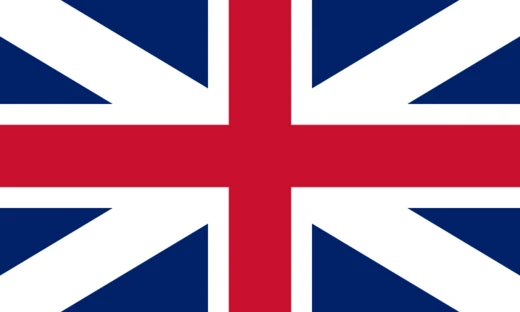
All Red Line
Telegraph system linking the British Empire, completed 1902.

Wikipedia / Wikimedia Commons
The All Red Line was an electrical telegraph network connecting much of the British Empire, officially launched on 31 October 1902. Its nickname came from the standard cartographic practice of marking British territories in red or pink.
While the first transatlantic cable, linking Ireland and Newfoundland in 1858, was a pioneering attempt, it was not part of the All Red Line construction; that cable failed after three weeks, and a durable connection was established in 1866 by the SS *Great Eastern*, running from Valentia Island in County Kerry, Ireland, to Heart's Content, Newfoundland. By 1870, Suez was connected to Bombay, and from there to Madras, Penang, and Singapore. In 1871, Australia was linked to British cables by extending a line from Singapore to Port Darwin, though it passed through Dutch Java. By 1872, a direct London-to-Australia telegraph connection via the Overland Telegraph Line was completed, but it was not a single continuous British-owned cable; it relied on the Dutch-owned line through Java until the All Red Line's Pacific section was completed in 1902. A private cable between Australia and New Zealand was completed in 1876, but it was not a British-government-owned All Red Line cable; the All Red Line's New Zealand connection was completed later as part of the Pacific cable.
The final major project to finish the All Red Line was the trans-Pacific section. The First Colonial Conference in 1887 passed a resolution supporting it, and more detailed plans were approved at the 1894 Colonial Conference in Ottawa, a general colonial conference where the cable was discussed. The Pacific Cable Committee formed in 1896 to study the proposal, and in 1901 the Pacific Cable Board was created with eight members: three from Britain, two from Canada, two from Australia, and one from New Zealand. Funding came from the governments of Britain, Canada, New Zealand, New South Wales, Victoria, and Queensland. In 1902, the newly built cable vessel *Colonia* began laying the cable for the Bamfield, British Columbia, to Fanning Island segment, a length of about 3,600 nautical miles and weighing some 8,000 tonnes. The cost of the Pacific cable alone was about £2 million, while the entire All Red Line network cost significantly more.
Initially, Britain insisted that the All Red system make landfall only on British-controlled soil for security. To achieve this,
- inaugurated
- 31 October 1902
- field
- Telecommunications
- known_for
- Linking the British Empire via undersea telegraph cables
- final_cost
- The Pacific cable alone cost around £2 million; the entire All Red Line network cost significantly more.
- major_cable_ship
- Colonia (also Anglia)
- governing_body
- Pacific Cable Board (formed 1901)
Lore & Background
The All Red Line was a system of electrical telegraphs that linked much of the British Empire. It was inaugurated on 31 October 1902. The informal name derives from the common practice of colouring the territory of the British Empire red or pink on political maps. The first transatlantic cable in 1858 was a separate earlier attempt, not part of the All Red Line construction; a lasting link was established in 1866 from Valentia Island, Ireland, to Newfoundland. By 1872, a direct London-to-Australia telegraph connection via the Overland Telegraph Line was completed, but it relied on the Dutch-owned line through Java until the All Red Line's Pacific section was completed in 1902. A private cable linked Australia to New Zealand in 1876, but it was not a British-government-owned All Red Line cable; the All Red Line's New Zealand connection was completed later as part of the Pacific cable.
To complete the All Red Line, the final major cable laying project was the trans-Pacific section. A resolution supporting such a project was passed by the First Colonial Conference in 1887 and more detailed plans were approved at the 1894 Colonial Conference in Ottawa. The Pacific Cable Committee formed in 1896 to study the proposal, and in 1901 the Pacific Cable Board was created. The cable vessel *Colonia* (along with the *Anglia*) played a key role in laying the Pacific cable, which cost about £2 million; the entire All Red Line network cost more.
Reader's Guide
The All Red Line was a system of electrical telegraphs that linked much of the British Empire, inaugurated on 31 October 1902. Its name came from the practice of colouring British territory red or pink on political maps. The network was built over decades, with the final trans-Pacific section completed in 1902 using the cable vessel Colonia. The Pacific Cable Board, formed in 1901, oversaw the project with funding from Britain, Canada, New Zealand, New South Wales, Victoria, and Queensland. The system was designed for security, with sea-landings only on British-controlled soil, leading to the annexation of Fanning Island in 1888. By 1911, the Committee on Imperial Defence reported the All Red Line was complete, with so many redundancies that 49 cuts would be needed to isolate the United Kingdom. During the First World War, British communications remained uninterrupted, while Britain quickly succeeded in cutting Germany's worldwide network. The Pacific Cable Board later laid a duplicate cable between Canada and New Zealand between 1923 and 1926. In 1948, the Commonwealth Telegraph Agreement was signed, forming the Commonwealth Telecommunications Organisation.
Did You Know?
- The All Red Line was inaugurated on 31 October 1902.
- The final major cable laying project was the trans-Pacific section, completed using the cable vessel Colonia.
- Fanning Island was annexed to the British Empire in 1888 to serve as a relay station for the trans-Pacific branch.
- The 1911 report stated that 49 cuts would be needed to isolate the United Kingdom from the network.
Frequently Asked Questions
What is the All Red Line?
It was an undersea telegraph cable network that stitched together the far-flung territories of the British Empire into a single communications system. The project was officially inaugurated on 31 October 1902 after decades of incremental cable-laying across the Atlantic, Indian Ocean, and Pacific.
Why is it called the 'All Red Line'?
The nickname reflects the long-standing cartographic convention of colouring British colonies and dominions in red or pink on maps. Because the telegraph routes followed those red-shaded territories from end to end, enthusiasts and the press began referring to the whole network by that vivid shorthand.
How much did the All Red Line cost and who oversaw it?
The final outlay to complete the system came to roughly two million pounds sterling. A dedicated governing body, the Pacific Cable Board, was established in 1901 to coordinate the last stretch of undersea cabling across the Pacific.
Which cable ship played the leading role in laying the network?
The vessel most closely associated with the project was the Colonia, the principal cable-laying ship that deployed the undersea telegraph lines linking the Empire's outposts. It handled the heavy, repetitive work of spooling miles of insulated cable onto the ocean floor.
How did the transatlantic section come about?
An early attempt in 1858 between Ireland and Newfoundland quickly failed, but a durable link was finally laid in 1866 by the SS Great Eastern, running from Valentia Island in County Kerry to Heart's Content in Newfoundland. That Atlantic crossing became the western anchor of what would eventually stretch all the way to the Pacific.
More in British Empire 1-24
Spotted an error? Know more?
This is a living reference — every entry is fact-audited, and reader corrections feed straight into our audit queue. Suggest an edit · See this site's audit record