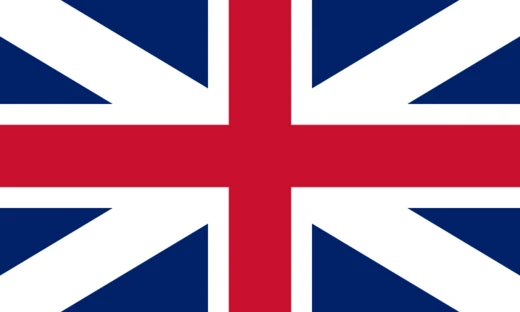
British Empire
The largest empire in history, spanning a quarter of Earth's land.

Wikipedia / Wikimedia Commons
The British Empire was a collection of territories—including dominions, colonies, protectorates, mandates, and other lands—governed or controlled by the United Kingdom and the states that came before it. Its origins trace back to the late 1500s and early 1600s, when England set up overseas trading posts and possessions, alongside Scotland’s own colonization efforts in the 1600s. During its peak in the 1800s and early 1900s, it ranked as the biggest empire ever known and held the position of the world’s leading power for about a hundred years. By 1913, it governed roughly 412 million people—23 percent of the global population at that time—and by 1920, its territory stretched across 35.5 million square kilometers (13.7 million square miles), covering 24 percent of all land on Earth. While the British Parliament served as the supreme legislative authority for many colonies and protectorates, dominions like Canada, Australia, and South Africa had their own parliaments with significant autonomy, and after the Statute of Westminster 1931, the British Parliament could no longer legislate for dominions without their consent. This imperial structure left a lasting mark on constitutional systems, legal frameworks, language, and culture worldwide. It was often called “the empire on which the sun never sets,” because sunlight always fell on at least one of its territories.
During the 1400s and 1500s, the Age of Discovery saw Portugal and Spain lead European exploration, building vast overseas empires. The immense wealth those empires generated spurred England, France, and the Netherlands to start their own colonies and trade routes in the Americas and Asia. Through a series of conflicts in the 1600s and 1700s against the Netherlands and France, Britain emerged as the dominant colonial force in North America. After the East India Company defeated Mughal Bengal at the Battle of Plassey in 1757, Britain became a major power on the Indian subcontinent.
The American Revolution cost Britain some of its oldest and most populous North American colonies by 1783. It held onto British North America (modern-day Canada) and territories in and around the Caribbean’s British West Indies, while shifting its colonial focus toward Asia, Africa, and the Pacific. Following France’s defeat in the Napoleonic Wars (1803–1815), Britain became the leading naval and imperial power of the 1800s
- field
- Colonial empire
- nationality
- British
- known_for
- Largest empire in history; global hegemon during the 19th century
- peak_population
- 412 million (1913)
- peak_area
- 35.5 million km² (1920)
- duration
- Late 16th century to 1997
Lore & Background
The British Empire's foundations were laid when England and Scotland were separate kingdoms. In 1496 King Henry VII commissioned John Cabot to find a Northwest Passage; Cabot reached Newfoundland in 1497 but founded no colony. No further English colonial attempts in the Americas occurred until the reign of Elizabeth I, during which privateers like John Hawkins and Francis Drake attacked Spanish and Portuguese ships. Writers such as Richard Hakluyt and John Dee—who first used the term 'British Empire'—pressed for England's own empire. England also carried out its first modern colonisation in sixteenth-century Ireland, with plantations of English and Welsh Protestants.
Reader's Guide
The British Empire was described as 'the empire on which the sun never sets', as the sun was always shining on at least one of its territories. The British Parliament was the supreme law-making authority for all possessions, and the empire's constitutional, legal, linguistic, and cultural legacy is widespread. After the American Revolution, Britain lost some of its oldest North American colonies but retained Canada and Caribbean territories, turning expansion toward Asia, Africa, and the Pacific. Following the Napoleonic Wars, Britain emerged as the principal naval and imperial power of the 19th century, a period of relative peace known as Pax Britannica. The empire reached its largest territorial extent after the First World War, but Britain was no longer the world's preeminent industrial or military power. Decolonisation accelerated after the Second World War; India achieved independence in 1947, and the handover of Hong Kong to China on 1 July 1997 symbolised for many the end of the empire. Fourteen overseas territories remain under British sovereignty, and many former colonies joined the Commonwealth of Nations.
Did You Know?
- By 1913 the British Empire held sway over 412 million people, 23 per cent of the world population at the time.
- The term 'British Empire' was first used by John Dee.
- The Battle of Plassey in 1757 led to Britain becoming a major power in the Indian subcontinent.
- The Suez Crisis of 1956 confirmed Britain's decline as a global power.
Frequently Asked Questions
What was the British Empire?
It was a vast network of dominions, colonies, protectorates, and mandates governed or controlled by England and, later, the United Kingdom. Its roots go back to the late 1500s and early 1600s, when English and Scottish traders first planted overseas outposts.
How big was the British Empire at its peak?
Around 1920 it stretched across roughly 35.5 million square kilometres, and by 1913 it administered approximately 412 million people. That made it the single largest territorial empire the world has ever seen.
When did the British Empire begin and end?
Its origins trace to the late sixteenth and early seventeenth centuries with the first English and Scottish colonial ventures. The final territories were relinquished in 1997, closing out a span of roughly four centuries.
Why is the British Empire considered the largest in history?
It covered about a quarter of all land on Earth and, during the nineteenth century and into the early twentieth, held the position of the world's dominant power for roughly a hundred years. No other state has simultaneously controlled that much territory and population.
How did the British Empire come to an end?
Rather than collapsing overnight, it unwound through a long process of decolonization in which colonies and dominions negotiated independence or were formally transferred over the course of the twentieth century. The last remaining possessions were handed over by 1997, marking the empire's final close.
More in British Empire 1-24
Spotted an error? Know more?
This is a living reference — every entry is fact-audited, and reader corrections feed straight into our audit queue. Suggest an edit · See this site's audit record