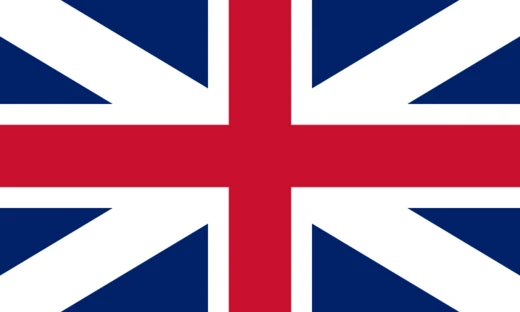
Blue Ensign
British ensign used by authorised vessels and former colonies.
The Blue Ensign is a British ensign used on vessels by certain authorised yacht clubs, Royal Research Ships, and British merchant vessels whose master holds a commission in the Royal Naval Reserve or has otherwise been issued a warrant. It originated in the 17th century with the St George's Cross in the canton on a blue field, and its evolution followed that of the Union Jack, with changes after the Acts of Union 1707 and the Act of Union 1800. Since 1864, the plain Blue Ensign has been allocated to ships in public service or commanded by an officer in the Royal Naval Reserve, while defaced versions with a badge or emblem are used by United Kingdom government departments, public bodies, and former British Empire territories.
- Origin
- 17th century
- Field
- Vexillology, maritime flags
- Nationality
- British
- Known for
- Used as a naval squadron flag, then as a civilian and government ensign; basis for many national flags
Lore & Background
The Blue Ensign originated in the 17th century with the St George's Cross in the canton on a blue field. Following the Acts of Union 1707, which united England and Scotland, the canton was updated to include the new Union Flag containing a saltire. With the Act of Union 1800, incorporating Ireland, St Patrick's Cross was added to the Union Flag and thus to all British ensigns from 1 January 1801.
During the reign of Elizabeth I, the Navy Royal inaugurated squadron colours to subdivide the English fleet into three squadrons, with admirals of the Red, White, and Blue squadrons. These were abolished as promotional ranks with the reorganisation of the Royal Navy in 1864. Prior to that reorganisation, the plain blue ensign was the ensign of the Blue Squadron. In 1864, an order in council allocated the Red Ensign to merchantmen, the Blue Ensign to ships in public service or commanded by an officer in the Royal Naval Reserve, and the White Ensign to the Navy.
Since 1864, the plain blue ensign is permitted for British merchant vessels with a certain number of retired Royal Navy personnel or Royal Naval Reservists, Royal Research Ships by warrant, and yachts of authorised clubs. Permission was suspended during both World Wars. Defaced Blue Ensigns are used by UK government departments, Crown Dependencies, British Overseas Territories, and former colonies such as Australia, New Zealand, and Fiji.
Reader's Guide
The Blue Ensign holds significant historical and symbolic importance as a British maritime flag that evolved alongside the Union Jack. Its origins in the 17th century as a simple blue field with the St George's Cross reflect the early English naval tradition. The 1864 reorganisation of the Royal Navy was a pivotal moment, assigning the Blue Ensign to public service and reserve vessels, a role it retains today. This change also established the modern system where defaced versions represent government bodies and former British territories.
The Blue Ensign's legacy extends beyond the United Kingdom, as it became the basis for national flags of several former British Empire nations, including Australia, New Zealand, Fiji, and Tuvalu. Its use by British Overseas Territories and Crown Dependencies continues to link those regions to British maritime and colonial history. The ensign also appears in various non-sovereign flags, such as those of Australian states and Canadian municipalities. The defaced Blue Ensign remains a living symbol of administrative and historical ties, while the plain version continues to be flown by authorised civilian vessels, preserving a tradition that dates back over three centuries.
Did You Know?
- The Blue Ensign originated in the 17th century with the St George's Cross in the canton on a blue field.
- Prior to 1864, the plain blue ensign was the ensign of the Blue Squadron of the Royal Navy.
- Permission for yachts to wear the blue ensign was suspended during both World War I and World War II.
- The Blue Ensign is the basis for the national flags of Australia, New Zealand, Fiji, and Tuvalu.
More in British Empire 1-24
Spotted an error? Know more?
This is a living reference — every entry is fact-audited, and reader corrections feed straight into our audit queue. Suggest an edit · See this site's audit record