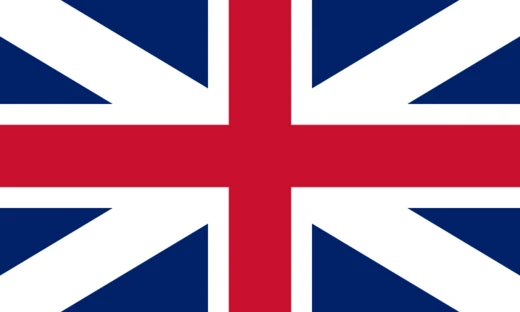
British diaspora in Africa
English-speaking people of British descent living in or born in Africa.
The British diaspora in Africa consists of English-speaking people, primarily of British descent, who live on the continent or were born there. Most are concentrated in South Africa and other Southern African nations where English is a primary language, such as Zimbabwe, Namibia, Kenya, Botswana, and Zambia. English is typically their first language. The term generally refers to White Africans of British ancestry, excluding anglicised native Africans.
British settlement in Africa began with coastal ports along West Africa for the Atlantic slave trade, but permanent colonization started in earnest at the Cape of Good Hope in the late eighteenth century. After the second British occupation of the Dutch Cape Colony in 1806, settlement accelerated. In 1820, the British government encouraged settlers in Albany (Settler Country) to secure the Cape Colony’s eastern frontier during the Cape Frontier Wars against the Xhosa. Natal was proclaimed a British colony in 1843. Following the Second Boer War in 1902, Britain annexed the Boer Republics of the Transvaal and the Orange Free State. Scottish missionary David Livingstone explored the continent and is credited as the first European to see Victoria Falls in 1855, becoming a key figure in African history for his conviction that his heart belonged there.
Late nineteenth-century discoveries of gold in the Witwatersrand and diamonds in Kimberley drew settlers from Britain, Australia, New Zealand, America, and Canada. Mineral wealth drove expansion northward. Mining magnate Cecil Rhodes envisioned a British Africa stretching from Cape Town to Cairo. His British South Africa Company, founded in 1889, controlled territory later named Rhodesia (now Zimbabwe and Zambia). Simultaneously, British settlers moved into the fertile White Highlands of British East Africa (now Kenya).
After World War II, decolonisation swept Africa as nationalist and anti-colonial movements grew. Ethnic Africans, who formed the overwhelming majority in British colonies and protectorates, had long been denied equal political and economic power. These colonies became self-governing, with Cold War powers often backing black nationalist guerrilla forces—such as the Mau Mau in Kenya, ZANU in Rhodesia, and MK in South Africa—who fought for majority rule under the principle of “one man, one vote.”
In Southern Rhodesia, the white minority unilaterally de
- Population estimate
- 1.6 million (white South Africans speaking English as first language, 2011 census)
- Primary language
- English
- Majority location
- Southern Africa (South Africa, Zimbabwe, Namibia, Kenya, Botswana, Zambia)
- Historical origin
- British settlement at Cape of Good Hope from late 18th century
- Key political affiliation
- Democratic Alliance (in South Africa)
Lore & Background
In South Africa, the Union of South Africa formed in 1910 under white minority rule. The British diaspora largely supported the United Party, which favoured close relations with the United Kingdom. Afrikaners entrenched apartheid from 1948 to 1994, established a republic in 1961, and withdrew from the Commonwealth. In 1955, 33,000 people in Natal signed the Natal Covenant against the republic; many British diaspora voted 'No' in the 1960 referendum, but it passed. After the 1994 democratic election, South Africa rejoined the Commonwealth. The British diaspora population declined from the early 1990s due to low birth rates and emigration, driven by crime, corruption, poor service delivery and affirmative action. Despite this, many British citizens continue to settle in South Africa, including retirees and White Zimbabweans.
Reader's Guide
The British diaspora in Africa played a central role in the colonial and post-colonial history of the continent. As settlers, administrators, and miners, they helped establish British political and economic control over large parts of Southern and Eastern Africa, particularly through the Cape Colony, Natal, Rhodesia, and Kenya. Their presence shaped the region's linguistic and cultural landscape, with English becoming a primary language in several countries. During the decolonisation era, the diaspora's position as a white minority in majority-black nations led to conflicts over political power and land, most notably in Rhodesia (Zimbabwe) and South Africa. In South Africa, the diaspora largely opposed apartheid and supported the United Party and later the Democratic Alliance, which became the official opposition after 1994. The diaspora's numbers have declined since the early 1990s due to emigration and low birth rates, but they remain a significant cultural and political minority, particularly in South Africa, where they continue to influence English-speaking culture, sports, and outdoor lifestyles. Their legacy is complex, tied to both the benefits of British imperial expansion and the injustices of colonial and apartheid-era discrimination.
Did You Know?
- The term 'British diaspora in Africa' usually refers to White Africans of British ancestry; anglicised native Africans are not considered part of it.
- Scottish medical missionary David Livingstone is believed to have been the first European to see Victoria Falls in 1855.
- In 1955, 33,000 people in Natal signed the Natal Covenant against the establishment of a republic.
- Over 200,000 British citizens live in South Africa, including more than 38,000 receiving a UK State Pension.
More in British Empire 1-24
Spotted an error? Know more?
This is a living reference — every entry is fact-audited, and reader corrections feed straight into our audit queue. Suggest an edit · See this site's audit record