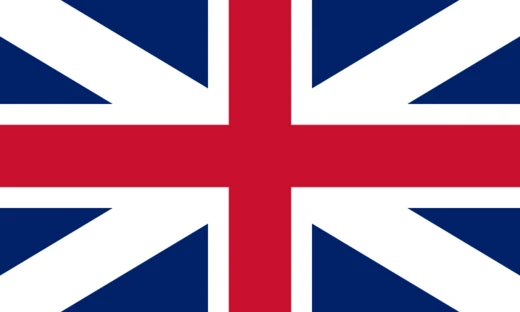
British Emperor
No British monarch ever held the official title of emperor.
The term "British Emperor" has no official historical standing; it was never a formal title used by the British government or recognized in reliable sources. However, the concept appears informally in references to certain medieval English kings who adopted imperial titles such as basileus or imperator, and in the later official title "Emperor of India" held by British monarchs from 1876 to 1948. The phrase also appears in connection with the mythical ruler King Arthur, described as an emperor in early Welsh texts.
- field
- Historical title and concept
- nationality
- British
- known_for
- Unofficial designation; never formally adopted as a title for British rulers
Lore & Background
The term "British Emperor" has sometimes been retroactively applied to mythical and historical rulers of Great Britain, Ireland, or the United Kingdom, but reliable sources do not use it, nor did the government. The mythical King Arthur is referred to as ameraudur (meaning "emperor") in medieval Welsh texts, including the 10th- or 11th-century poem Geraint, son of Erbin, which provides the earliest known reference to Arthur as emperor.
Several English kings from 930 to 1066 displayed imperial ambition, using titles such as basileus, imperator, princeps, augustus, and caesar. Athelstan proclaimed himself imperator in 930, and Edgar the Peaceful issued charters calling himself Anglorum Basileus. After the Norman Conquest, the use of imperial titles largely ceased. The epithet "Empress" for Matilda derived from her marriage to Holy Roman Emperor Henry V, not from any British imperial claim.
Henry VIII's dispute with Pope Clement VII led to the Act in Restraint of Appeals (1533) declaring England an empire governed by one supreme head, and the First Act of Supremacy (1534) tied the head of the church to the imperial crown. These acts established the concept of an imperial crown for England, later reaffirmed under Elizabeth I and after the Restoration. In 1801, George III declined the suggestion to be declared Emperor of the British Isles, choosing instead to be king of the United Kingdom of Great Britain and Ireland.
Reader's Guide
The significance of the term "British Emperor" lies in its absence as an official title, contrasting with the imperial ambitions and legal declarations of certain English monarchs. While kings like Athelstan and Edgar used imperial titles, and Henry VIII's legislation asserted England as an empire, no British ruler ever formally adopted the title of emperor for the British Isles. The official title "Emperor of India" was created for Queen Victoria in 1876 and used until 1948, but this applied only to India, not Britain. The concept thus reflects a tension between symbolic claims to imperial sovereignty and the practical retention of the royal title. The term "British Empire" itself is an unofficial designation and does not imply a person called emperor. This legacy shows how the idea of empire in British history was more a matter of legal and political assertion than of titular change.
Did You Know?
- The mythical King Arthur is called ameraudur (emperor) in medieval Welsh texts.
- Athelstan proclaimed himself imperator in 930, six years after the last Carolingian emperor died.
- The title 'Emperor of India' was officially held by Queen Victoria and her successors from 1876 to 1948.
- George III declined the suggestion to be declared Emperor of the British Isles in 1801.
More in British Empire 1-24
Spotted an error? Know more?
This is a living reference — every entry is fact-audited, and reader corrections feed straight into our audit queue. Suggest an edit · See this site's audit record