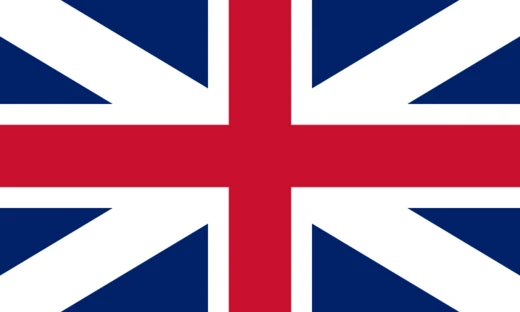
British Empire flag
A proposed flag for the British Empire's dominions.
The British Empire flag was a concept that emerged in the early 1900s as a proposed symbol to represent all dominions, Crown colonies, protectorates, and territories of the British Empire. Although the Union Jack of the United Kingdom already served this role, some regions—such as Canada, Australia, New Zealand, and South Africa—were developing distinct national identities and began using British ensigns defaced with their own coats of arms. This led to calls for a new flag that would highlight the growing status of these self-governing nations, and various Empire flags saw use from the beginning of the reign of George V to the end of the Second World War.
- field
- Vexillology and imperial governance
- known_for
- Proposed symbol of the British Empire's dominions and territories
- period_of_use
- From the beginning of the reign of George V to the end of the Second World War
Lore & Background
Views on the Union Jack as an imperial flag were disputed. A 1914 lecture series at King's College noted that the Union Jack did not function as a true Empire flag in law, as each territory was simply a possession of a common monarch. In Canada, an 1913 article in the Evening Record acknowledged the Union Jack as an Empire flag but argued it could not adequately represent certain nationalities, calling for a distinct Canadian flag. A 1939 article in the Leader-Post featured a Canadian writer who claimed the Union Jack was not an imperial flag because it was designed only for the British Isles, before Canada or Australia existed, and that Canada was entitled to a flag as a mark of nationhood. The Native Sons of Canada renewed demands for a Canadian flag around 1932, with vice president C. M. Woodworth arguing that Canada could not continue flying the Union Jack when Ireland and South Africa had adopted their own flags, reducing the Union Jack to a symbol of only the United Kingdom.
Reader's Guide
In Australia, a 1924 article declared the idea of a British Empire flag a misconception, noting that the Union Jack was designed for the United Kingdom and its use elsewhere was highly restricted. A 1926 article in the Southern Cross argued the Union Jack had become outdated since the establishment of the Irish Free State, and questioned why dominions recognized the United Kingdom in their flags without reciprocation. Another article in the Southern Mail indicated some Australians thought of the Union Jack as a foreign symbol, though the author still supported flying the Australian flag as a privilege granted by the British. In Canada, Prime Minister Mackenzie King and opposition leader R. B. Bennett endorsed a proposal for a distinct Canadian flag in 1939, with King arguing that the Union Jack had not changed since 1801 and did not reflect the emergence of the dominions, while some Conservatives opposed it on grounds of imperial unity. The British Empire flag thus represented an ongoing debate about national identity, imperial unity, and the adequacy of the Union Jack as a symbol for a diverse association of nations.
Did You Know?
- A 1914 lecture series at King's College noted there was no common currency, record of marital status, or process of naturalization across the British Empire.
- C. M. Woodworth, vice president of the Native Sons of Canada, argued that Canada was the only dominion without a unique flag recognized by law.
- A 1924 Australian article claimed that soldiers of the British Army were alleged to have the privilege to remove the Union Jack wherever it was flown inappropriately, though this was never exercised.
- Maxwell Garnett, general secretary of the League of Nations Union, suggested altering the Royal Standard of the United Kingdom to include dominion symbols.
More in British Empire 1-24
Spotted an error? Know more?
This is a living reference — every entry is fact-audited, and reader corrections feed straight into our audit queue. Suggest an edit · See this site's audit record