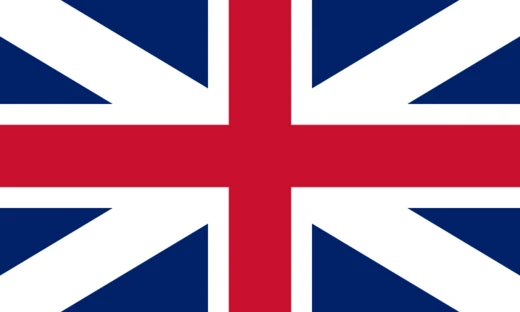
Territorial evolution of the British Empire
Largest empire in history, spanning over a quarter of Earth's land.
The territorial evolution of the British Empire began with the foundation of the English colonial empire in the late 16th century. Over centuries, many territories around the world came under the control of the United Kingdom or its predecessor states, forming the largest empire in history. At its territorial peak in 1920, the empire controlled over 35,500,000 km², more than 26% of Earth's land (excluding Antarctica), with a population exceeding 449 million.
- Peak area
- over 35,500,000 km² (13,700,000 sq mi) in 1920
- Peak population
- over 449 million in 1920
- Total colonies
- about 120 throughout its history
- Current territories
- 14 British Overseas Territories
- Head of state
- British monarch (currently Charles III)
Lore & Background
The territorial evolution of the British Empire is considered to have begun with the foundation of the English colonial empire in the late 16th century. When the Kingdom of Great Britain was formed in 1707 by the union of Scotland and England, England's colonial possessions passed to the new state. Similarly, when Great Britain united with Ireland in 1801 to form the United Kingdom, control over Irish colonial possessions passed to the latter state. From 1714 to 1837, the British throne was held by kings who also ruled the German state of Hanover, but this was a personal union and Hanover is not usually considered part of the British Empire.
Reader's Guide
The British Empire comprised dominions, colonies, protectorates, mandates, and other territories ruled or administered by the United Kingdom and its predecessor states. No uniform system of government was applied; territories included those under formal sovereignty, protectorates, League of Nations or United Nations mandates, and condominiums such as Anglo-Egyptian Sudan. Several dominions gained independence in stages during the earlier part of the 20th century, and much of the rest of the empire was dismantled in the twenty years after the Second World War, starting with India and Pakistan in 1947 and continuing until the handover of Hong Kong to China in 1997. Many former territories are members of the Commonwealth of Nations, with 14 Commonwealth realms (plus the United Kingdom) retaining the British monarch as head of state. The British monarch is also Head of the Commonwealth, a purely symbolic and personal title; all members are fully sovereign states.
Did You Know?
- At its territorial peak in 1920, the British Empire controlled over 35,500,000 km², more than 26% of Earth's land (excluding Antarctica).
- The United Kingdom had about 120 colonies throughout its history, the most of any country; the French colonial empire came second with about 80.
- From 1714 to 1837, the British throne was held by kings who were also rulers of the German state of Hanover, but this was a personal union and Hanover is not usually considered part of the British Empire.
- The British monarch held the additional title of Emperor/Empress of India from 1876 to 1947.
More in British Empire 1-24
Spotted an error? Know more?
This is a living reference — every entry is fact-audited, and reader corrections feed straight into our audit queue. Suggest an edit · See this site's audit record